
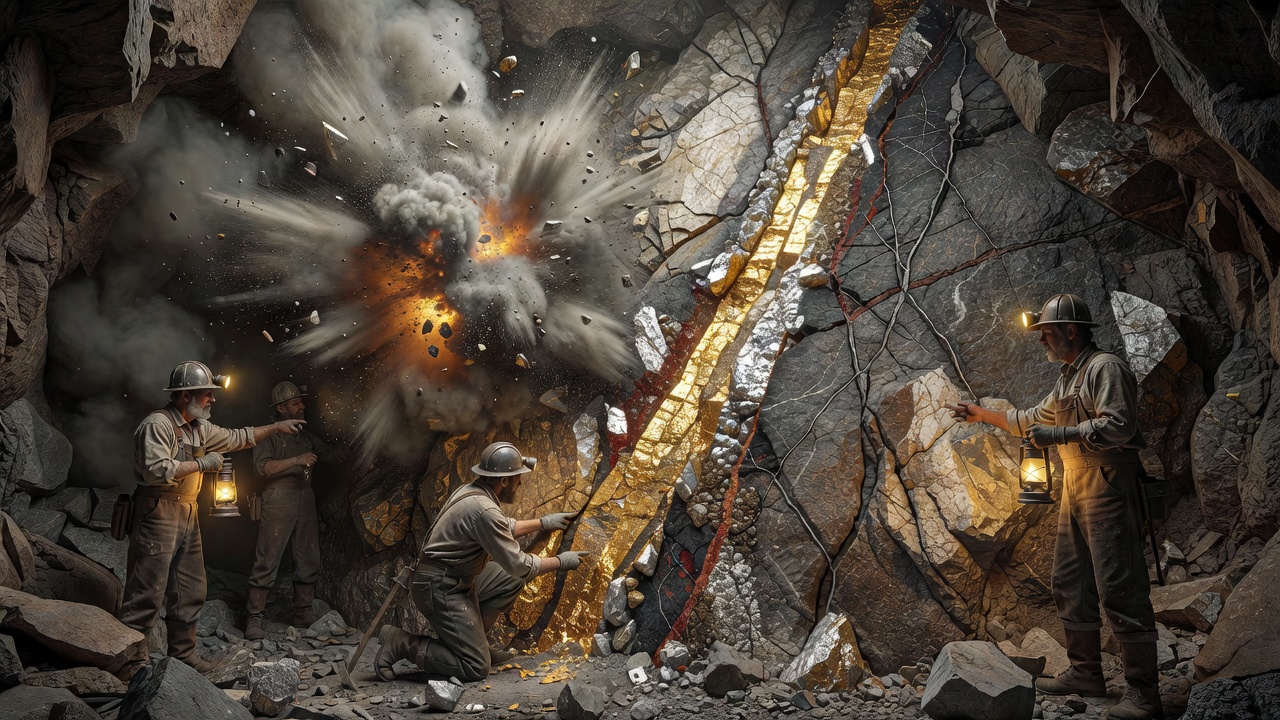
A single blast can expose more geological information than a decade of surface surveys. When engineers detonate a charge deep in a rock face and the dust settles, what remains is not just rubble - it is a record of pressure, chemistry, and time written into the stone itself. This is the strange paradox of hard-rock mining: destruction is often the only path to understanding what lies beneath.
The phrase dynamite riches captures something real about how mineral wealth has historically been uncovered - not through gentle excavation, but through controlled violence applied with precision. Prospectors who understood this dynamic learned to read the aftermath of a blast the way a geologist reads a core sample. For those curious how this pattern plays out in a more accessible, entertainment-driven format, dynamite riches the mother lode features have become a popular way to explore the drama of striking a vein without ever picking up a shovel. But the underlying logic - that concentrated force reveals concentrated value - traces back to actual mining practice, not invention.
This piece looks at how mining discoveries actually happen, what mother lode features tell geologists about a deposit's origin, and how ore vein characteristics translate into real mineral wealth potential. The goal is to separate the romantic image of the lucky strike from the technical reality behind it.
What "Dynamite Riches" Really Means in Mining History
The Explosive Origins of Modern Ore Extraction
Before controlled blasting existed, miners relied on hand tools, fire-setting, and slow mechanical grinding to break rock. The introduction of stable explosives in the mid-19th century changed the economics of extraction entirely. Rock that once took weeks to clear could be opened in hours. This shift did more than speed up labor - it allowed miners to access deeper, harder rock formations that previously sat beyond reach, including many of the veins that held the richest ore concentrations.
Why Explosives Changed the Scale of Discovery
Deeper access meant miners started encountering ore bodies that surface prospecting could never have found. Many significant deposits sit beneath layers of barren rock, invisible from the surface and detectable only once blasting exposes a cross-section. The term dynamite riches reflects this literal cause-and-effect: the explosive act itself became the discovery mechanism, not just a tool for extraction after discovery.
The Psychological Pull of the Sudden Strike
There is a reason mining folklore is full of stories about a single blast revealing a fortune. The sudden, visible transformation - dull rock giving way to a visible seam of ore - created a cultural image of instant wealth that still shapes how people imagine mining today, even in contexts far removed from an actual quarry or shaft.
Understanding Mother Lode Features
Defining the Mother Lode
The term "mother lode" originally referred to a primary, continuous vein system from which smaller, secondary veins branch outward. It is the source structure, not a single pocket of ore. Identifying one requires mapping how mineral-bearing rock threads through a larger formation, often across considerable distance and depth.
Structural Signatures Geologists Look For
Mother lode features tend to share recognizable traits: consistent vein width over long distances, mineralization tied to a specific host rock type, and a clear structural control such as a fault line or fold that guided mineral-rich fluids into place millions of years ago. These are not random accumulations - they follow predictable geological logic.
Distinguishing a True Mother Lode from a Surface Anomaly
Not every promising outcrop leads to a major deposit. A surface anomaly might show high-grade material in a small, isolated pocket that pinches out quickly at depth. A genuine mother lode, by contrast, persists and often widens as extraction continues, which is why sustained drilling and sampling matter more than a single encouraging assay.
- Continuous vein trend across multiple drill intersections
- Consistent mineral assemblage tied to a known geological process
- Structural association with faulting, folding, or intrusive contact zones
- Depth persistence rather than shallow, isolated pockets
How Mining Discoveries Unfold in Practice
From Surface Clues to Subsurface Confirmation
Most mining discoveries begin with indirect evidence - soil geochemistry anomalies, altered rock coloration, or float samples (loose rock fragments that originated from an unseen source above or nearby). These clues guide where exploratory drilling or blasting will occur, but they rarely confirm the size or grade of what lies below.
The Role of Exploratory Drilling and Blasting
Drilling provides a narrow column of information - a core sample only inches wide. Blasting, when used in exploratory adits or shafts, exposes a much wider face of rock at once, giving geologists a broader view of vein continuity and orientation. Both methods are complementary, and neither alone gives a complete picture.
Interpreting the Immediate Aftermath
Once rock is broken open, geologists examine color banding, crystal structure, and visible sulfide content to make an initial judgment before formal assay results return. Experienced field geologists develop a practiced eye for these visual signals, though lab analysis remains the only reliable confirmation of actual metal content.
Decoding Ore Vein Characteristics
Vein Width, Orientation, and Continuity
A vein's width often correlates with the volume of mineralizing fluid that passed through a fracture over geological time. Orientation matters too - veins that run parallel to major structural trends in a region tend to be more predictable and easier to trace than those that cut across unrelated formations.
Mineral Composition and Grade Variability
Grade rarely stays uniform along a vein's length. High-grade shoots - localized zones of exceptionally rich material - can appear within an otherwise average vein, often at intersections with secondary fractures. Recognizing these patterns helps mining companies prioritize where to concentrate extraction effort.
Host Rock Alteration as a Diagnostic Tool
The rock surrounding a vein often shows chemical alteration caused by the same fluids that deposited the ore. Bleaching, silicification, or clay alteration in host rock can signal proximity to mineralization even before the vein itself is visible, making alteration mapping a valuable predictive tool.
Depth Persistence and Pinch-and-Swell Patterns
Veins rarely maintain a constant width. Many display a "pinch-and-swell" pattern, narrowing and widening in response to structural stress during formation. Understanding this behavior helps engineers plan extraction paths that follow the vein's natural geometry rather than fighting against it.
Assessing Mineral Wealth Potential
Grade, Tonnage, and the Economics of Extraction
A deposit's real value depends on the combination of ore grade and total tonnage, not either figure alone. A high-grade pocket with limited volume may produce less overall value than a lower-grade deposit spread across a much larger area, especially once extraction costs are factored in.
Accessibility and Infrastructure Constraints
Geological richness means little if a deposit sits somewhere extraction is impractical. Depth, terrain, water table conditions, and distance from processing facilities all shape whether a discovery becomes a functioning mine or remains a documented but undeveloped resource.
Market Timing and Commodity Price Cycles
Mineral wealth potential is not fixed - it shifts with commodity prices. A deposit considered marginal during a price downturn can become highly profitable once prices recover, which is why some known ore bodies sit dormant for years before development resumes.
From Discovery to Development: Turning Geology into Value
Feasibility Studies and Resource Modeling
Before any large-scale extraction begins, companies commission feasibility studies that model the deposit in three dimensions, estimate recoverable tonnage, and project operating costs against expected returns. These studies determine whether a discovery justifies the capital required to develop it.
Environmental and Regulatory Considerations
Modern mining development also depends on environmental permitting, water management planning, and community consultation. These processes can extend a project's timeline by years and directly affect its ultimate profitability.
Long-Term Site Management and Closure Planning
Responsible development includes planning for eventual mine closure and land rehabilitation from the earliest stages, ensuring that a site's long-term legacy is managed alongside its short-term production goals.
Frequently Asked Questions
What exactly makes a rock formation a "mother lode" rather than just a good deposit?
A mother lode is defined by continuity and scale - it acts as the primary source vein from which smaller branch veins extend. A good deposit might be rich but isolated, while a true mother lode persists across significant distance and depth, feeding multiple secondary structures.
How do geologists know where to drill before any physical evidence appears?
They rely on indirect indicators like soil geochemistry, magnetic and gravity surveys, and known regional structural trends. These tools narrow down probable target zones long before any drilling or blasting confirms an actual ore body.
Why does ore grade vary so much within a single vein?
Mineralizing fluids did not deposit metal uniformly - concentration often depended on temperature, pressure, and chemical conditions at specific points along a fracture. This produces high-grade shoots surrounded by lower-grade material within the same vein system.
Can a deposit with high mineral wealth potential still fail as a mining project?
Yes. Geological richness alone does not guarantee profitability. Poor accessibility, high extraction costs, weak commodity prices, or regulatory delays can all prevent a technically valuable deposit from ever becoming a working mine.
How reliable is visual inspection right after a blast for judging ore quality?
Visual inspection gives a useful first impression - color, texture, and visible sulfide content offer clues - but it cannot replace laboratory assay results. Experienced geologists use visual cues to prioritize sampling, not to make final grade determinations.
Do modern mining companies still rely on explosives the way historical operations did?
Blasting remains standard practice in hard-rock mining, though modern techniques are far more precise and controlled than historical methods. Explosives are still the most efficient way to break dense rock and expose deeper ore structures for both extraction and geological assessment.