
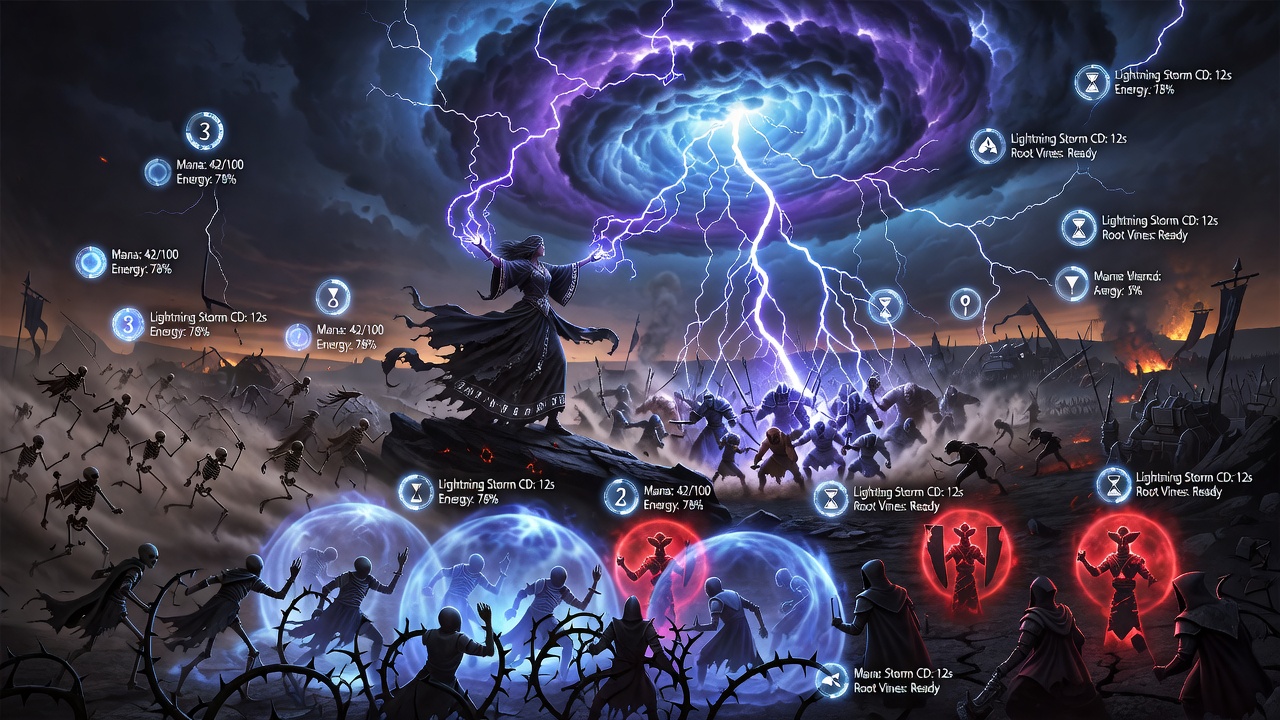
One well-timed play can swing an entire match, and Lightning Storm sits at the center of more comebacks and collapses than almost any other card in its category. Players who understand its timing windows win exchanges that look unwinnable on paper. Players who don't lose tempo, board presence, and often the game itself in a single unfortunate trade.
This guide breaks down the mechanics that separate a mediocre Lightning Storm play from a decisive one. We'll cover the strongest card synergies, the deck archetypes that make the card shine, and the defensive patterns that shut it down cold. If you're new to the mechanics involved or want a refresher before jumping into a match, reviewing how to play lightning storm first will make the rest of this guide click faster, since the strategic layer builds directly on top of the base rules. From there, we move into the practical decisions you'll face turn after turn.
None of this is theoretical. Every recommendation here reflects patterns that show up consistently across competitive play, not guesswork or wishful thinking. By the end, you'll have a concrete framework for building around the card, countering it, and adjusting your approach mid-game when conditions change.
Understanding Lightning Storm Strategy Fundamentals
What Makes Lightning Storm Different from Other Area Cards
Lightning Storm isn't a blunt instrument. Unlike flat area-damage cards that simply punish clustered targets, its value scales with information - knowing what your opponent is likely to commit to the board before you commit your answer. A core piece of lightning storm strategy is patience: firing early often trades down, while holding it one extra turn frequently converts a two-for-one into a four-for-one.
Reading Tempo Before You Commit
Tempo reading separates strong players from average ones. If your opponent is behind on resources, they're statistically more likely to overextend, which is exactly when Lightning Storm delivers maximum value. Watch for hesitation in their deployment pattern - it usually signals they're building toward a push you can punish.
Positioning and Timing Windows
The card rewards players who track cooldown cycles closely. Firing during an opponent's natural lull, right after they've spent their defensive resources, creates a window where retaliation is nearly impossible. Missing that window by even a turn can cut the card's effectiveness by half.
Best Cards for Lightning Storm Synergy
Damage Amplifiers
Cards that lower enemy resistance or apply a damage-over-time effect before Lightning Storm lands pair exceptionally well with it. The goal is simple: soften the target pool so the storm's base damage crosses the threshold needed for clean kills rather than partial chip damage.
Crowd-Control Enablers
Among the best cards for lightning storm, crowd-control units that root, slow, or group enemies deserve special mention. Forcing enemies into a tight cluster before detonation turns a mediocre hit into a full board wipe. This combination is one of the most reliable win conditions in decks built around area control.
Bait and Distraction Units
Cheap, disposable units that provoke aggressive commitment from your opponent set up the conditions Lightning Storm thrives on. Sacrificing a low-value unit to bait a group response is a small cost for a massive payoff two turns later.
- Debuff units that reduce enemy defense before the storm lands
- Slow or root effects that prevent target dispersal
- Low-cost bait units that encourage clustering
- Follow-up burst damage to clean up survivors
Lightning Storm Deck Build Approaches
Control-Oriented Builds
A control-focused lightning storm deck build leans on defensive units and resource denial early, saving the storm as a finishing blow once the opponent has invested heavily in a push. This build wins slower matches by attrition and punishes impatient opponents severely.
Aggro-Hybrid Builds
Some players prefer a faster shell that uses Lightning Storm not as a game-ending bomb but as a mid-game tempo swing, clearing a path for an aggressive follow-up. This version sacrifices some late-game power for consistency and speed.
Balancing Card Ratios
Whichever direction you choose, ratio discipline matters. Too many high-cost synergy cards and you'll stall before you ever draw into your combo. Too few, and Lightning Storm becomes a standalone card with no support, drastically reducing its ceiling.
- Keep synergy pieces to roughly a quarter of your deck to maintain consistency
- Include at least one cheap bait unit per matchup type you expect to face
- Reserve two to three slots for direct counters to opposing area-control tools
How to Counter Lightning Storm Effectively
Spreading Your Board Deliberately
The single most effective way to counter lightning storm is refusing to give it a target-rich cluster. Deliberate spacing costs you some coordination benefits, but it denies the opponent the multi-kill payoff they're hunting for.
Baiting the Storm Early
Sacrificing a low-value unit to force an early, wasteful Lightning Storm activation is a legitimate defensive tactic. Once it's spent, your opponent loses their strongest answer to your next aggressive push.
Building Resistance and Mitigation
Certain defensive tools reduce area damage outright or grant temporary immunity. Slotting even one or two of these into a deck that regularly faces storm-heavy opponents changes the entire matchup calculus in your favor.
Lightning Storm Gameplay Tips for Different Matchups
Against Aggressive Decks
Aggro opponents naturally cluster units to maximize pressure, which plays directly into the storm's strengths. Hold the card until they've fully committed rather than firing on the first group you see - a partial trade here often isn't worth losing your answer to their second wave.
Against Control Decks
Control matchups move slower, so Lightning Storm becomes less about immediate value and more about denying your opponent's ability to stabilize. Use it to break up their defensive formations right as they attempt to consolidate.
Adjusting Mid-Match
Good gameplay tips only matter if you're willing to abandon your original plan when conditions shift. If your opponent adapts by spreading out or holding back units, don't force the play. Patience beats a forced, low-value trade every time.
Common Mistakes and How to Avoid Them
Firing Too Early
The most frequent mistake is impatience. Players see two or three units together and fire immediately, missing the far larger cluster that would have formed one turn later.
Ignoring Opponent Resource Counts
Failing to track what your opponent has left in hand leads to predictable, punishable plays. If they still hold a counter or mitigation tool, your storm may land for far less than expected.
Overloading the Deck with Synergy Pieces
A deck built entirely around one combo becomes fragile. If you draw your synergy pieces without the storm itself, or vice versa, you're left with a hand that can't function on its own.
Frequently Asked Questions
When is the best moment to use Lightning Storm in a match?
The strongest window is right after your opponent commits multiple units to a push, ideally once they've also spent any defensive counters. Firing too early trades value for safety; waiting too long risks losing the play entirely to a defensive reaction.
Can Lightning Storm work in a fast, aggressive deck?
Yes, though its role shifts from a game-ending bomb to a tempo tool that clears blockers for your attackers. Aggro builds should treat it as a mid-game enabler rather than a finisher.
What's the fastest way to bait an opponent's Lightning Storm?
Deploy a low-cost, disposable unit slightly ahead of your main push. If the opponent takes the bait and fires early, your real commitment the following turn faces no resistance.
How many synergy cards should a deck include?
Around a quarter of your deck is a reasonable target. This keeps the combo consistent without sacrificing the flexibility needed to handle matchups where the combo never comes together.
Is spreading units always the right defense?
Not always - spreading reduces coordination and can weaken your offense in matchups where clustering isn't being punished. Use it specifically when you know or suspect your opponent is holding area-damage tools.
Does matchup type change how I should build my deck?
Significantly. Control matchups favor patience and late-game payoff, while aggro matchups reward using the card earlier for tempo. Building with a flexible ratio of synergy pieces lets you adjust without needing a separate deck for each opponent type.